 ultimate-guide
How to Keep Pets Entertained Indoors: 2026 Guide
Table of Contents
- Why Indoor Enrichment Matters for Dogs and Cats
- Dog Enrichment Activities That Work in Small Spaces
- Indoor Puzzle Feeders for Small Dogs and Cats
- How to Tire Out a Dog Inside Without a Yard
- Keeping Pets Entertained Indoors When You're Away
- Adapting Indoor Activities for Senior Pets and Limited Mobility
- Safety, Household Hazards, and Signs an Activity Is Working
- A Simple Daily Indoor Activity Plan
- Frequently Asked Questions
Last Updated: October 8, 2026
Why Indoor Enrichment Matters for Dogs and Cats
Dogs and cats are built to work for things: to sniff, stalk, solve, and move. When that drive has no outlet, it shows up as chewed furniture, midnight yowling, or a pet that sleeps all day and paces all evening.
The good news: enrichment doesn't require square footage. A hallway, a rug, and ten focused minutes can do more than an hour of unsupervised yard time.
Dog Enrichment Activities That Work in Small Spaces
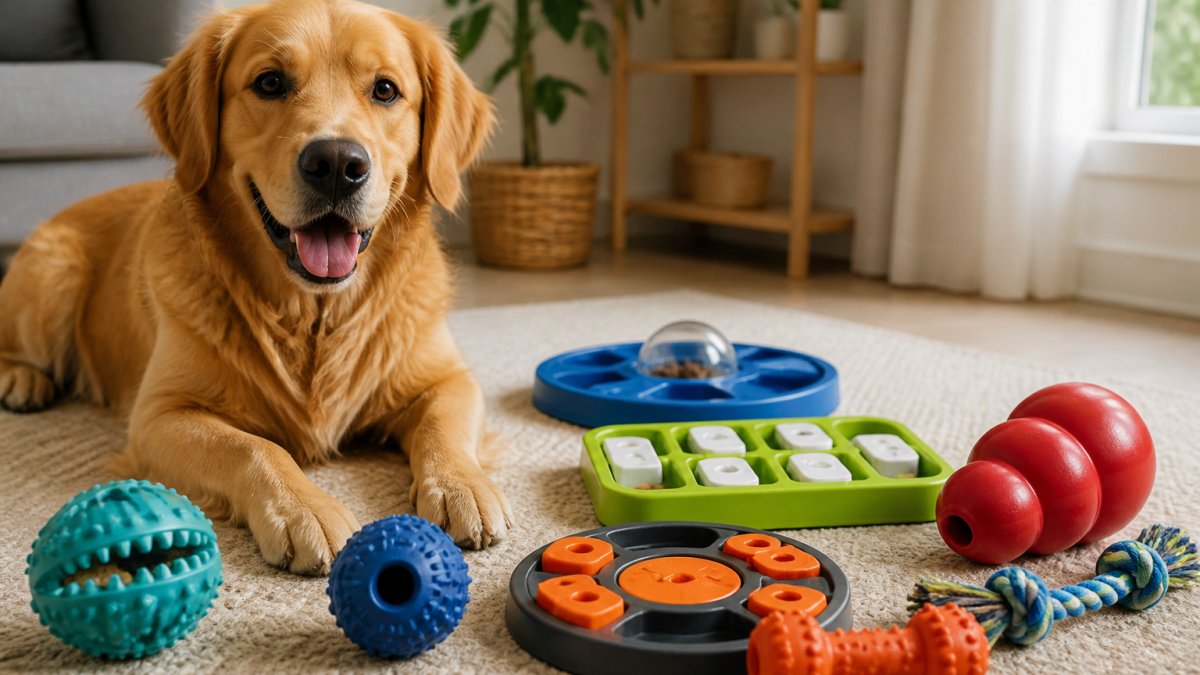
Dog enrichment activities fit into four categories: scent work, training games, food puzzles, and movement games. Rotating across all four keeps a dog's brain and body guessing, which is exactly what prevents the flat, restless energy that builds in small apartments.
Start with what you already own. Cardboard boxes, muffin tins, and a handful of kibble cover most of it.
Scent Games and Nose Work at Home
Scent games are the highest-return activity for indoor dogs because sniffing tires a dog faster than running. Hide treats in cardboard boxes, under cup towels, or along a baseboard trail and let your dog search. Start easy, with treats in plain sight, then increase difficulty as your dog learns the game. Five to ten minutes of nose work can leave a dog as satisfied as a long walk.
Short Training Sessions and Obedience Cues
Short training sessions of three to five minutes, repeated two or three times a day, teach obedience cues while burning mental energy. Practice sit, down, and recall in different rooms so your dog generalizes the commands. End every session on a success, before your dog gets bored or frustrated. This is the single easiest way to tire out a dog inside without a yard.
Indoor Puzzle Feeders for Small Dogs and Cats
Indoor puzzle feeders for small dogs are food-dispensing toys that make a pet work for its kibble instead of eating from a bowl. They turn a two-minute meal into fifteen minutes of problem-solving, which is why they're the most efficient enrichment tool you can buy.

Food Puzzles, Treat Rewards, and Meal Portions
The key is to subtract from the bowl, not add to it.
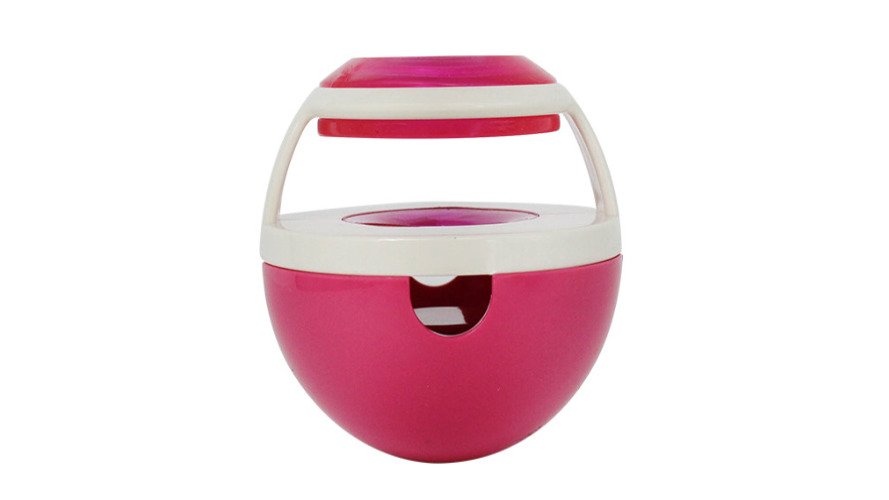
For dogs, our Interactive Slow Feeder Toy for Large Dogs is a treat-dispensing puzzle ball you fill and let your dog roll and shake to release.

For cats, the 2-in-1 Cat Slow Feeder uses different-sized holes so cats work for their food, and it's dishwasher-safe when the meal is over.

How to Tire Out a Dog Inside Without a Yard
Tiring a dog indoors comes down to stacking small efforts: a scent game, a training session, and a movement game back to back. Individually each is mild. Together they drain energy the way a walk would.
Indoor Obstacle Courses and Body Awareness Games
Build a course from household items: a broom handle to walk over, a low box to crawl under, a chair to circle. Guide your dog through with treats and praise, and reward each obstacle. This kind of body awareness game builds coordination and confidence, and it's gentle enough for most dogs. Keep sessions under ten minutes and stop while your dog still wants more.
Keeping Pets Entertained Indoors When You're Away
Time alone is where most indoor enrichment plans fall apart. The fix is to leave behind activities that work without you: a stuffed puzzle feeder, a rotation of toys, and a predictable daily routine. But the right setup depends on the species, and most guides only cover dogs.
Dogs Left Alone
- Under 2 hours: a frozen puzzle feeder. Slow, self-directed, low mess.
- 2-4 hours: toy rotation plus a scent box. Novelty holds attention longer than any single toy.
- 4-8 hours: a puzzle feeder plus a durable chew. The chew covers the oral outlet; the puzzle covers the brain.
Cats Left Alone
Cats are often labeled low-maintenance, which is why their alone-time enrichment gets skipped. A bored indoor cat redirects into scratching furniture, over-grooming, or 3 a.m. yowling. What actually works:
- A scratching outlet. Vertical and horizontal scratchers, placed where the cat already scratches, not tucked in a corner. This protects furniture and gives the cat a legitimate daily outlet.
- Food puzzles sized for a cat's muzzle. A dog puzzle ball is often too large or too easy for a cat. Look for smaller holes and lighter rolling resistance.
- Window access. A perch or cat tree by a window provides hours of passive enrichment, birds, squirrels, and street activity are free entertainment.
Other Common Household Pets
The keyword says pets, and that includes more than dogs and cats. A few species-specific notes:
- Rabbits and guinea pigs: forage-based enrichment, hay in a puzzle feeder, cardboard tubes stuffed with greens, and chew-safe untreated wood. They are social, so a single rabbit left alone all day needs more, not less, engagement.
- Birds: foraging wheels, shreddable paper, and rotated perches. Birds boredom-pluck, so rotation matters as much as for dogs.
- Reptiles and fish: enrichment looks different, varied tank decor, basking spots, and feeding challenges. Check species-specific guidance before adding anything to an enclosure.
Toy Rotation and Varied Activities
Toy rotation means keeping only a few toys out at once and swapping them every few days. Familiar toys become novel again after a break, which stretches your budget and your pet's interest.
| Time Away | Best Activity | Why It Works |
|---|---|---|
| Under 2 hours | Frozen puzzle feeder | Slow, self-directed, low mess |
| 2-4 hours | Toy rotation plus scent box | Novelty holds attention |
| 4-8 hours | Puzzle feeder plus scratching post | Covers feeding and clawing needs |
| All day | Staggered feeders, varied toys | Prevents a single boredom peak |
For cats left alone, a scratching outlet matters as much as a toy. Our Vertical Cat Scratching Post gives cats a designated place to scratch, which protects furniture and keeps an indoor cat busy.

Adapting Indoor Activities for Senior Pets and Limited Mobility
Most indoor enrichment advice assumes a healthy, mid-energy adult dog or cat. That leaves out a large share of households: senior pets, puppies, flat-faced breeds, tripods, and pets recovering from surgery or managing arthritis. The activities stay the same, scent, food, training, movement, but the dose, surface, and duration change.
Senior Dogs and Cats
Aging pets lose hearing, vision, and joint cushioning before they lose the drive to engage. Adjust for each:
- Scent work first. Sniffing is low-impact and doesn't require sharp eyes or ears. Hide treats at nose height on a low box or along a baseboard rather than on shelves.
- Raise the food puzzle. A puzzle feeder on the floor forces a senior dog to fold its neck and shift weight forward. Set it on a nonslip mat or a low platform so the pet eats at elbow height.
- Shorten and warm up. Two to three minutes per session, on carpet or a yoga mat, beats one long session on hardwood. Cold, slick floors are where slips happen.
For senior cats, the same logic applies. A scratching post placed at floor level or a low ramp to a favorite perch keeps clawing and climbing in reach. If your cat has stopped jumping onto furniture, that's a signal to bring the activity down, not to stop offering it.
Puppies and Small Breeds
Puppies need the same four categories but in 60- to 90-second bursts, several times a day. Their attention span is short and their joints are still closing, so avoid repetitive jumping and long obstacle runs. Small breeds can use the same games as large dogs, the puzzle just needs to be sized so a small muzzle can reach the food without the toy rolling away.
Pets With Mobility Limitations
For a pet with a diagnosed condition, a missing limb, or post-surgical restrictions, the goal shifts from burning energy to maintaining engagement and comfort. A few concrete swaps:
- Scent boxes at floor level instead of hidden around the room.
- Lick mats instead of puzzle balls, licking is stationary and calming.
- Stationary training cues (watch me, touch, stay) instead of sit-stand-down chains that load the hind end.
If your pet has a diagnosed condition, check with your veterinarian before adding new activity. The right gear helps here too: a slow feeder that doesn't require chasing, a scratching post placed at a comfortable height, and soft resting spots all reduce strain.
Safety, Household Hazards, and Signs an Activity Is Working
Safety comes before enrichment, every time. Supervise new toys until you know how your pet handles them, and remove anything chewed into pieces.
- No small parts that can be swallowed
- No string, ribbon, or cord left unsupervised
- Food puzzles counted against daily meal portions
Knowing whether an activity is working matters as much as choosing it. Signs it's working: your pet settles calmly afterward, greets you without frantic pacing, and shows interest in the next session. Signs it isn't: restlessness returns within minutes, or your pet ignores the activity entirely.
A Simple Daily Indoor Activity Plan
A workable plan is short and repeatable. Morning: scatter a portion of kibble for a scent search. Midday: one puzzle feeder. Afternoon: a three-minute training session. Evening: a movement game or an obstacle course run.
That's roughly twenty minutes of your attention across the whole day, and it covers scent, food, training, and movement. Rotate the specifics so it never feels like a chore for either of you.
The hardest part of indoor enrichment isn't finding activities. Luminesce Pet Products makes that easier with thoughtfully selected essentials: a treat-dispensing puzzle ball that turns mealtime into play, a dishwasher-safe slow feeder for cats, and a durable scratching post that gives indoor cats a proper outlet. Each one is designed to simplify pet parenting and support happier, calmer companions. View all and build a routine your pet looks forward to.
Frequently Asked Questions
How do I mentally stimulate a dog indoors?
Rotate between three or four activity types each day: scent games where kibble is hidden around a room, short training sessions practicing sit, down, and recall, and food puzzles that release treats as your dog works. A treat-dispensing ball like the Interactive Slow Feeder Toy for Large Dogs turns a meal into a 15-minute problem to solve. Ten to fifteen minutes of this kind of mental work often tires a dog as much as a longer walk.
What are the signs that my pet is understimulated?
Common signs include destructive chewing, excessive barking or meowing, pacing, and following you from room to room. Cats may over-groom or knock items off surfaces. Dogs may dig at furniture or stare at you during the hours they would normally rest. If these behaviors appear mainly when you are away or during long indoor stretches, boredom is a likely cause rather than a training problem.
How do I keep my pet active in a small apartment?
Use vertical space and the floor you already have. A vertical cat scratching post gives cats a designated outlet that protects your sofa, and a rolling interactive cat toy ball covers ground without needing a yard. For dogs, hide treats under cups, practice crawl under and walk over cues between furniture, and swap toys weekly so the same objects feel new.
Is boredom the same as separation anxiety in pets?
No. Boredom shows up whenever your pet has nothing to do, even when you are home. Separation-related distress appears specifically when you leave, often within the first 30 minutes, and can include drooling, house soiling, or nonstop vocalizing. If the behavior only happens on departures, that points to distress; if it happens during long indoor days with you present, enrichment is usually the fix.