 blog
blog
Durable Outdoor Gear for Dogs: 2026 Buying Guide
Table of Contents
- Durable Outdoor Gear for Dogs: What Actually Holds Up
- Dog Hiking Gear That Survives the Trail
- Choosing a Durable Dog Harness for Trail and Camp
- Dog Camping Gear: What Earns Space in the Car
- Cold Weather Gear for Dogs: Fit Before Fabric
- Safety Limits, Wear Points, and Gear Lifespan
- Conclusion
- Frequently Asked Questions
Last Updated: October 12, 2026
Durable Outdoor Gear for Dogs: What Actually Holds Up
Durable outdoor gear for dogs is built to survive repeated trail use, weather exposure, and rough terrain without failing at seams, buckles, or fabric.
Below, we break down what holds up on the trail and at camp, plus how to judge durability before you spend money.
Most guides list products; this one teaches you how to evaluate them. A cheap harness with bar-tacked seams will outlast an expensive one with single stitching every time.
Dog Hiking Gear That Survives the Trail
Trail gear fails at predictable points: the leash clip, the harness D-ring, and the fabric where it rubs against the dog's shoulders.
A day hike demands different gear than an overnight adventure. Short trips need only a standard collar and a 6-foot leash.
Here is what separates trail-tested gear from the rest:
- Ripstop fabric resists tears because the weave stops small rips from spreading
- Bar-tacked stitching at stress points doubles the thread where force concentrates
- Metal hardware outlasts plastic clips, which crack in cold weather
What most guides miss: abrasion resistance matters more than waterproofing on most trails. A dog brushing through brush wears fabric down faster than rain ever will.
Choosing a Durable Dog Harness for Trail and Camp
A durable dog harness should distribute pulling force across the chest, not the throat, and hold its shape after repeated washing and wet-dry cycles.
The biggest mistake is buying by size label instead of measurement. A deep-chested dog needs a different cut than a narrow, long-backed one.
For safety and load limits, remember this: a harness rated for a 40-pound dog should not carry a 60-pound dog's load.
Dog Camping Gear: What Earns Space in the Car
Dog camping gear earns its place by doing two jobs at once or packing down small. If it only does one thing and takes up a full seat, leave it home.
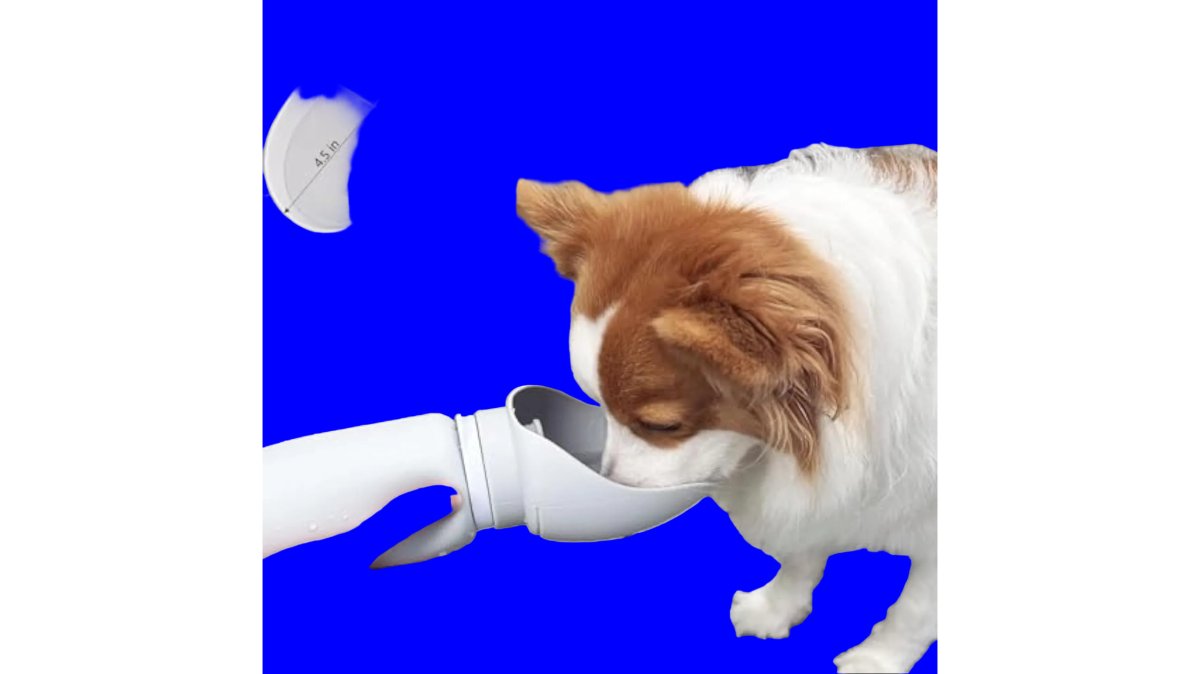
For food and water, look for containers that seal tight and stack. A portable bottle with a built-in drinking bowl saves space and keeps your dog hydrated between stops. Our own Portable Dog Water Bottle with Foldable Drinking Bowl holds 550ml and folds flat, the kind of two-in-one design that earns car space.

Waste pickup and cleanup accessories round out the kit. A leash-clipped waste bag dispenser means you never dig for bags, and a treat pouch keeps rewards handy for training on the road.
| Gear Type | What to Look For | Why It Matters |
|---|---|---|
| Kibble carrier | Roll-top seal, stackable | Keeps food fresh, saves space |
| Water bottle | Built-in bowl, leak-proof | One item does two jobs |
| Waste dispenser | Leash clip, refillable | Always accessible |
| Treat pouch | Wipe-clean lining | Easy cleanup after trips |
Cold Weather Gear for Dogs: Fit Before Fabric
Cold weather gear for dogs works only when it fits correctly. A jacket that gaps at the chest lets cold air in no matter how thick the insulation is. Measure first, then choose the fabric.
Measure three numbers, not one
Most sizing failures come from trusting a letter size. Take three measurements with a soft tape:
- Chest girth, the widest point behind the front legs, usually the deepest part of the ribcage
- Back length, from the base of the neck (where the collar sits) to the base of the tail
- Neck girth, around the neck where the collar rests, snug but not tight
Write all three down, then compare each against the garment's listed dimensions, not just the size label. A jacket can fit the chest and still be too short in the back, leaving the hindquarters exposed on a long-bodied dog.
A quick fit check once the jacket is on:
- You can slide two fingers under the chest strap without straining the fabric
- The back hem reaches the base of the tail, not mid-spine
- The dog can sit, lie down, and walk without the jacket bunching at the shoulders
Size L in our Vedem Fleece Puffer Vest for Small Dogs & Cats measures 18 inches around the chest, 13 inches along the back, and 12 inches around the neck.

Fabric and construction: what actually holds heat
Insulation type matters less than how well the shell blocks wind and how well the layer traps air. A few practical rules:
- Quilted or baffled construction keeps insulation from shifting, so warmth stays where it's needed
- A water-resistant or water-repellent shell prevents the insulation from soaking through and losing loft
- A fleece or brushed lining adds warmth without bulk and reduces friction against the coat
High-coverage jackets protect more of the body but can restrict movement. For bitter cold, prioritize insulation and coverage; for active trail days, prioritize fit and range of motion. A full-coverage coat that rubs under the front legs will chafe on a long hike, while a lighter, well-fitted vest often outperforms it in motion.
Paw protection and post-walk checks
Paw protection deserves its own mention. Ice, salt, and frozen ground cause burns and hazards. Paw balm creates a barrier, and booties help on long exposure. Check paws after every winter outing.
A short post-walk routine catches problems early:
- Wipe paws with a damp cloth to remove road salt and de-icer, which can irritate pads and are toxic if licked off
- Inspect pads for cracks, cuts, or ice balls packed between the toes
- Dry the coat and belly thoroughly, especially on double-coated breeds, so damp fur doesn't chill the dog indoors
- Check the jacket's straps and seams for ice buildup or stiffness before storing
Cold-weather care for the gear itself
Winter gear takes more abuse than summer gear thanks to salt, slush, and repeated wet-dry cycles. Rinse the jacket after muddy or salted walks, hand wash with mild soap, and air dry away from direct heat, which can break down water-repellent coatings and shrink synthetic insulation. Store jackets clean and fully dry so mildew doesn't set in between trips.
Safety Limits, Wear Points, and Gear Lifespan
Gear lifespan depends on use, not calendar age. A harness worn twice a week on soft trails can last years; the same harness on daily rocky scrambles may show seam wear in a season. The variables that matter most are abrasion, UV exposure, wet-dry cycling, and load.
Load limits: how much should a dog carry?
A dog can comfortably carry roughly 10 to 25 percent of its body weight, with the lower end for smaller, older, or less conditioned dogs and the higher end for large, fit, working-type breeds on shorter carries. That range is a starting point, not a target, build up gradually on short walks before trusting it on a full-day hike.
A few load rules that prevent injury:
- Keep the load balanced, equal weight on both sides of a saddlebag, packed low and close to the body
- Never exceed the manufacturer's weight rating for the pack or harness
- Skip the pack entirely for puppies whose growth plates are still open, for seniors with joint issues, and for dogs recovering from injury
- Watch gait and posture, if the dog's stride shortens, the back arches, or it lags, the load is too heavy
Hardware and leash strength
Leash and hardware failures are among the most common causes of a dog getting loose. When judging strength:
- Metal clips (especially welded or forged designs) generally outlast plastic side-release buckles under sudden force
- A D-ring welded closed is stronger than one with an open gap that can straighten under load
- Bar-tacked stitching at the D-ring and clip attachment points concentrates reinforcement where force peaks
- Rope or webbing width affects comfort and strength, thin cord can cut into a handler's hand under a hard pull
Visibility and temperature risks
Safety isn't only about hardware. On roads, in fog, or during hunting season, high-visibility gear, reflective trim, bright colors, or a light, helps others see the dog. In heat, pavement burns paws and dogs overheat faster than people because they cool mainly through panting and their paw pads. Time outings for cooler hours, carry water, and know the signs of heat stress (heavy panting, drooling, wobbling, brick-red gums).
A simple inspection routine
Inspect the same wear points every few weeks:
- Check all stitching for loose or pulled threads
- Test every clip and buckle for a firm, complete close
- Look for fraying where straps meet the body
- Confirm D-rings still sit flush with no cracks or gaps
Care, cleaning, and maintenance
Most durable materials handle gentle hand washing with mild soap. Avoid harsh detergents that break down coatings, rinse thoroughly, and dry away from direct heat. A few specifics that extend life:
- Rinse after salt or mud exposure, abrasive grit works into webbing and accelerates wear
- Air dry fully before storing; damp gear grows mildew and weakens fabric
- Re-tension or adjust straps after washing, since heat and water can loosen hardware
- Inspect zippers and closures on packs and jackets, and clear grit from the teeth
Repairability, warranties, and expected lifespan
Durability also depends on repairability. A harness with replaceable straps or a warranty lasts longer in practice than one you throw away at the first failure, so ask about repair policies and coverage before you buy.
A practical framework for judging lifespan:
- Warranty coverage, what's covered (stitching, hardware, fabric defects) and for how long
- Replaceable parts, straps, buckles, or pads that can be swapped without replacing the whole item
- Repair options, whether the maker repairs gear or offers replacement parts
- Realistic service life, heavy daily use wears gear faster than occasional weekend trips, so match expectations to use
Conclusion
The real challenge with durable outdoor gear for dogs is that durability hides until something fails. You can't see weak stitching in a product photo or feel a cheap clip through a screen. Luminesce Pet Products focuses on convenience, functionality, and comfort so your gear keeps up with every adventure. Browse our essentials and gear up for the next trip.
Frequently Asked Questions
What outdoor gear does a dog need for hiking?
A well-fitted harness, a hands-free or standard leash, and a portable water bottle with a foldable bowl cover most day hikes. Add paw protection if you hike on hot rock or rough gravel, and a treat pouch for training stops. For longer routes, a dog backpack lets your dog carry a small amount of its own water and kibble. Start with the items you will use every trip, then add gear as your routes get longer.
How do I choose durable gear for an active dog?
Look at the construction, not the label. Check for reinforced stitching at stress points, metal hardware instead of plastic where load matters, and ripstop or coated fabrics that resist abrasion. Webbing should feel dense, not stiff. Then confirm fit: gear that shifts or rubs fails early regardless of material. Wash and inspect your gear monthly, and replace anything with frayed stitching or cracked buckles before it breaks on a trail.
How can I keep my dog warm outdoors in cold weather?
Measure your dog's chest, back length, and neck girth before buying any jacket, then compare those numbers to the sizing chart instead of guessing by breed or weight. A quilted fleece puffer vest works well for small dogs and cats on cold walks. Coverage matters more than thickness: a jacket that leaves the belly exposed loses most of its value. Short-haired, senior, and small dogs lose heat fastest, so they benefit most from insulation.
How do I clean and maintain outdoor gear for dogs?
Rinse harnesses, leashes, and packs in lukewarm water with a mild soap after muddy trips, then air dry away from direct heat. Skip the dryer, since heat damages webbing and coated fabrics. Wash insulated jackets on a gentle cycle and check the seams while damp. Inspect buckles, D-rings, and stitching every few weeks, and store gear dry and loosely folded. This routine adds months to the working life of most outdoor dog gear.